
How to Start Solids for Baby: 4 Easy Methods and Guide
Are you currently feeling excited yet slightly anxious as you prepare to start solids for baby milestones and transition your little one to real foods? Introducing solid foods is one of the most rewarding developmental stages of early childhood, marking a shift from exclusive milk feeds to a world of diverse textures and flavors. However, successful food introduction depends on developmental readiness signs rather than a strict calendar age.
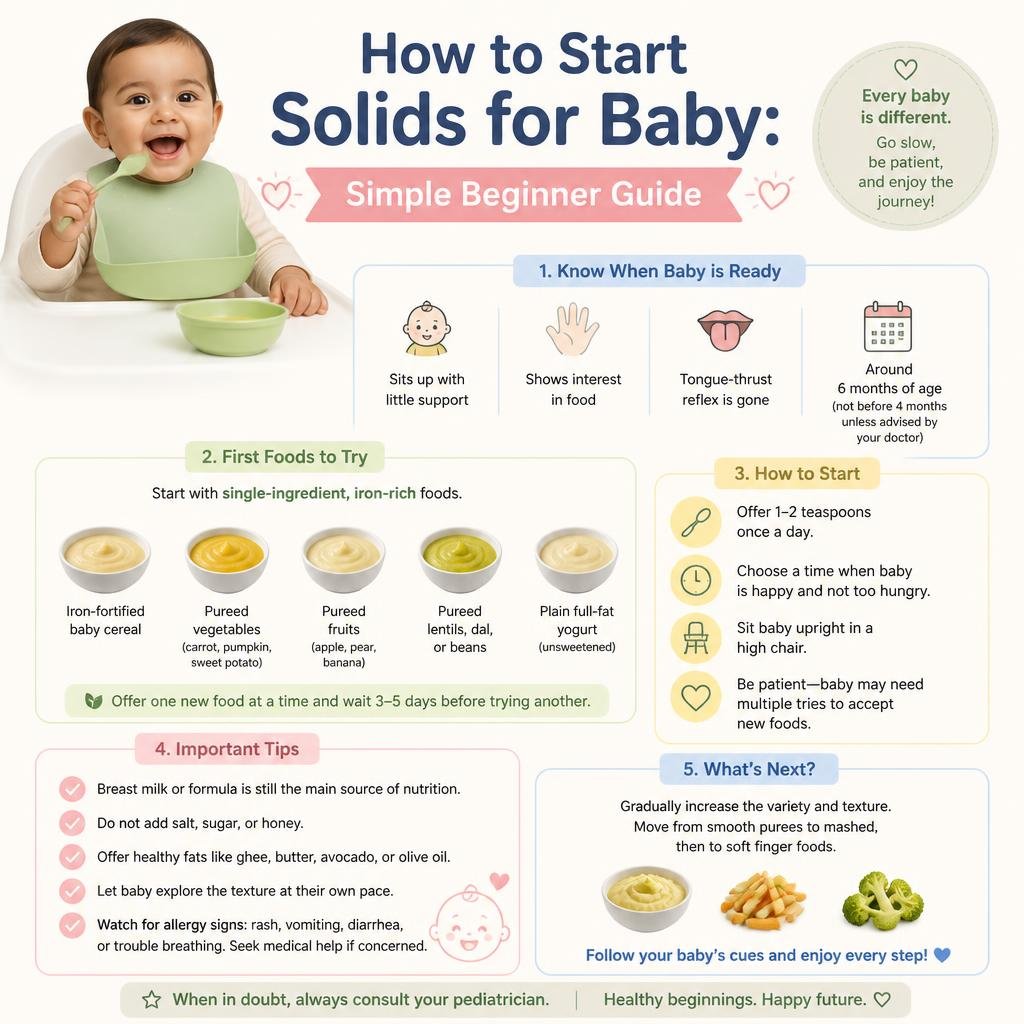
To start solids for baby transitions safely, wait until approximately 6 months of age and ensure they show all 5 readiness signs: 1. Good head/neck control, 2. Sitting upright with minimal support, 3. Loss of tongue-thrust reflex, 4. Interest in food, and 5. Ability to swallow.
Every parent remembers the mixture of anticipation and worry that comes when you start solids for baby routines, watching your little one experience their very first taste of real food. During the first six months of life, breast milk or formula provides all the necessary hydration, vitamins, and minerals your infant requires.
As they reach the half-year mark, their natural stores of iron and zinc begin to deplete, making the introduction of nutrient-dense solids a biological necessity. By taking a developmental approach to starting foods, you can ensure a safe and successful transition.
When Can You Start Solids for Baby Safely?
Pediatric organizations, including the American Academy of Pediatrics (AAP) and the World Health Organization (WHO), recommend exclusive breastfeeding or formula feeding for the first six months of life.
Introducing solids before four months is clinically discouraged, as an infant’s digestive tract and kidneys are not yet mature enough to process complex foods safely.
Before offering any solid food when your baby is not eating, you must demonstrate all of the following developmental milestones, indicating their body is physically ready to swallow safely:
- 1. Stable Head and Neck Control
- Readiness Sign: The baby can hold their head steady and upright without assistance while sitting.
- Why It Matters: Prevents slumping, which compromises the airway and increases the risk of choking.
- 2. Sitting Upright with Minimal Support
- Readiness Sign: The baby can sit in a highchair or on your lap without tipping over, leaning forward, or sliding down.
- Why It Matters: Sitting upright allows gravity to assist in moving food from the mouth to the stomach safely.
- 3. Extrusion (Tongue-Thrust) Reflex Disappearance
- Readiness Sign: The baby no longer automatically pushes food out of their mouth with their tongue when a spoon is placed on their lips.
- Why It Matters: Sucking is a newborn reflex; babies must learn to use their tongue to push food to the back of the mouth for swallowing.
- 4. Active Interest in Table Foods
- Readiness Sign: The baby leans forward, opens their mouth when food is near, watches you eat, or reaches for items on your plate.
- Why It Matters: Indicated cognitive readiness and interest in participating in family mealtimes.
- 5. Ability to Close Lips Around a Spoon
- Readiness Sign: The baby can clear food from a spoon using their upper lip rather than just sucking on the spoon.
- Why It Matters: Signals coordinate muscle development in the jaw and lips required to manage solid food textures.
What Are the Different Methods to Start Solids for Baby?
When planning how to introduce foods, parents typically choose between two main methods, or a combination of both:
Method 1: Traditional Spoon-Feeding (Purees)
This method involves offering smooth, blended foods on a spoon, gradually increasing texture over time.
- Pros: Easy to track exact intake; lower initial mess; allows control over early ingredients.
- Cons: Baby does not practice chewing early; can lead to texture resistance if purees are offered for too long.
Method 2: Baby-Led Weaning (BLW)
This method bypasses purees, offering soft, finger-sized pieces of table food directly to the baby, letting them feed themselves.
- Pros: Promotes fine motor skills (pincer grasp) and self-regulation; baby eats the same foods as the family early on.
- Cons: Highly messy; can cause parental anxiety due to increased gagging.
Many modern pediatricians recommend a combination: offering smooth purees for convenience, while regularly introducing soft finger foods (like avocado slices or roasted sweet potato) to encourage self-feeding and chewing practice.
Solid Feeding Safety Checklist
| Safety Factor | Action Item | Common Mistake to Avoid | parent takeaway |
|---|---|---|---|
| Honey | Avoid all honey (raw or cooked) until 12 months. | Giving honey to soothe a cough or sweeten foods. | Honey contains botulism spores that can be fatal to infants under one. |
| Salt & Sugar | Do not add salt or sugar to baby’s food. | Serving processed adult foods or canned items with high sodium. | Infant kidneys cannot process excess sodium; sugar promotes tooth decay. |
| Texture Prep | Cut round foods (like grapes or cherry tomatoes) into quarters. | Serving whole grapes, hot dogs, or raw baby carrots. | Round, firm shapes are the primary causes of infant choking. |
What First Foods Are Best to Start Solids for Baby?
Historically, white rice cereal was the standard first food. Today, pediatric experts recommend focusing on iron-rich and nutrient-dense foods as first introductions.
Because iron stores decrease around six months, focus on foods that support cognitive and physical development.
Here are the best first foods to offer your baby:
- Iron-Rich Proteins: Pureed beef, chicken, turkey, or lentils.
- Fortified Infant Cereals: Oatmeal, barley, or spelt cereals fortified with iron.
- Healthy Fats: Mashed avocado, banana, or whole-milk plain yogurt.
- Soft Vegetables and Fruits: Steamed and mashed sweet potato, butternut squash, carrots, or ripe pears.
Introducing Common Allergens
Current clinical research shows that introducing highly allergenic foods early (around 6 months) and frequently can reduce the risk of developing food allergies.
- Common Allergens: Peanut butter (thinned with water), well-cooked egg, dairy (yogurt), soy, wheat, fish, and shellfish.
- How to offer: Introduce one allergen at a time in small quantities, and wait 3–5 days before introducing another new food to monitor for reactions (hives, vomiting, wheezing).
How Can Parents Feed Solids Safely and Avoid Choking?
One of the greatest fears parents have when introducing solids is choking. It is vital to distinguish between normal gagging and true choking, as gagging is a safe, protective reflex that helps babies learn to manage food.
Below is a guide to identifying gagging versus choking, along with the correct response:
Gagging vs. Choking Indicators
| Indicator | Gagging (Safe & Normal) | Choking (Emergency) |
|---|---|---|
| Sound | Loud coughing, spluttering, retching, or spitting noises. | Silent, gasping, soft whistling, or high-pitched squeaks. |
| Appearance | Red face, watering eyes, tongue thrusting forward. | Blue or pale skin, lips, or fingernails; wide, panicked eyes. |
| Airway Status | Airway is partially open; baby is actively clearing the food. | Airway is fully blocked; baby cannot breathe or cry. |
| Correct Response | Stay calm, watch closely, and let the baby cough it out. Do not stick your finger in their mouth. | Immediately pick the baby up and administer infant CPR/choking back blows. Call emergency services. |
FAQ: Frequently Asked Questions About Starting Solids
Q1: What is the exact best age to start solids for baby milestones?
A: The recommended age is around 6 months, when the baby exhibits all physical readiness signs. Do not start before 4 months, as their digestive system is not mature enough, and avoid delaying solids past 7 months, as they need iron.
Q2: Should I offer solids before or after breast milk or formula?
A: During the first year, milk remains the primary source of nutrition. Always offer breast milk or formula first, then wait 30–60 minutes before offering solid foods. This ensures they get their liquid nutrition and do not feed on solids when overly hungry.
Q3: How do I know if my baby is allergic to a food?
A: Watch for symptoms that occur within minutes to hours of ingestion, including hives, redness around the mouth, vomiting, diarrhea, swelling, or difficulty breathing. If you notice mild symptoms, stop the food and call your pediatrician. For severe symptoms, seek emergency care.
Q4: Is gagging normal when starting solids?
A: Yes, gagging is a normal, protective reflex. A baby’s gag reflex is located near the front of the tongue, helping them push oversized pieces of food forward. Remain calm, do not intervene, and let them cough to clear the food.
Q5: Can I mix baby cereal with formula or breast milk in a bottle?
A: No, you should never add cereal to a bottle unless specifically instructed by your pediatrician to treat severe acid reflux. Putting cereal in a bottle increases the risk of choking and causes excessive weight gain.
Q6: How much solid food should my 6-month-old eat daily?
A: At 6 months, the goal is exposure and practice, not caloric intake. Start with one meal a day, offering just 1–2 teaspoons of puree or one piece of soft finger food. Most of their nutrition still comes from breast milk or formula.
Q7: What cups should I introduce when starting solids?
A: Introduce a small open cup or a straw cup with water at 6 months. Avoid traditional spouted sippy cups, as they do not promote mature swallowing patterns or coordinate oral motor skills. Limit water to 2–4 ounces per day.
Q8: Why does my baby push all the food out of their mouth?
A: This is due to the tongue-thrust reflex, a newborn survival mechanism that prevents foreign objects from entering the throat. If your baby pushes food out repeatedly, it indicates their reflex has not faded and they are not ready for solids.
Q9: Can I give my baby cow’s milk at 6 months?
A: You should not give cow’s milk as a drink until 12 months, as it lacks iron and can cause intestinal bleeding. However, you can safely use whole-milk plain yogurt or cheese in purees or as finger foods starting at 6 months.
Q10: How do I prepare peanut butter safely for a baby?
A: Never give thick, raw peanut butter from a spoon, as it is a severe choking hazard. Thin 1 teaspoon of smooth peanut butter with 2 teaspoons of warm water, breast milk, or formula, and mix it into oatmeal or yogurt.
Q11: Does starting solids help babies sleep through the night?
A: No, this is a common myth. Clinical studies show no significant link between starting solid foods and longer stretches of nighttime sleep. Sleep is a developmental milestone related to neurological maturity, not stomach fullness.
Q12: How often should I introduce new foods?
A: Introduce single-ingredient foods one at a time. For common allergens, wait 3 to 5 days between new foods to easily identify the culprit if an allergic reaction occurs. For non-allergenic fruits and vegetables, you can offer them daily.
Conclusion & Key Takeaways
Helping your baby transition to solid foods is a exciting journey that relies on recognizing physical readiness and prioritizing safety. By focusing on developmental milestones, offering iron-rich foods, and keeping mealtimes positive, you can set a strong foundation for healthy eating.
Quick Reference Action Plan
- Confirm Readiness: Ensure your baby has stable head control and can sit upright with minimal support before offering solids.
- Prioritize Iron: Focus on iron-rich first foods like pureed meats, beans, and iron-fortified cereals to support brain development.
- Introduce Allergens Early: Offer common allergens like peanut butter and egg around 6 months, waiting 3–5 days between introductions.
- Know the Safety Rules: Never give honey under 12 months, avoid added salt and sugar, and cut round foods like grapes into small pieces.
Every baby progresses at their own pace. Keep mealtimes relaxed, celebrate their curiosity, and consult your pediatrician with any concerns. You are doing a wonderful job, parent!
Disclaimer: The information in this article is for educational purposes only and should not replace professional medical advice. Always consult your pediatrician regarding your child’s health, development, and nutritional transitions.

Isabelle Monroe
Isabelle Monroe is a devoted mom, passionate writer, and firm believer that there are no perfect parents only real ones. She writes honest, heartfelt content to remind every parent that simply showing up with love is always more than enough.
Isabelle Monroe
Isabelle Monroe is a devoted mom, passionate writer, and firm believer that there are no perfect parents only real ones. She writes honest, heartfelt content to remind every parent that simply showing up with love is always more than enough.



Get more inspiration
Subscribe for weekly simple insights to build deeper, healthier relationships with your children.